




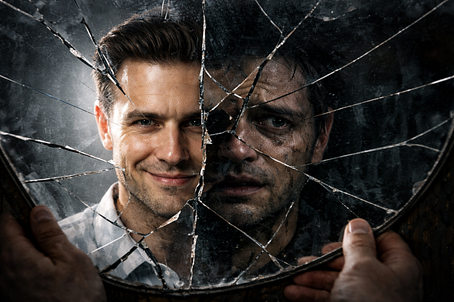







"I'm a realist. I see things exactly as they are."
I've never trusted anyone who says this. Lying was the subject of On Lying. This is a different phenomenon entirely. They actually believe it. That's what makes it harder to argue with and almost impossible to fix.
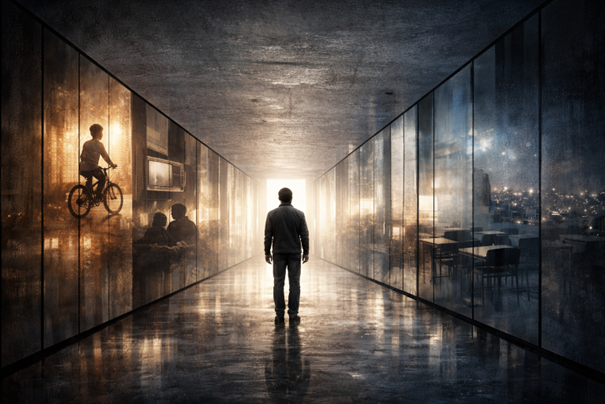
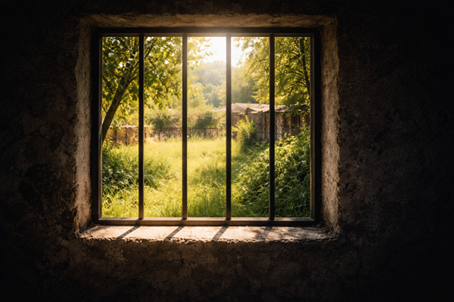
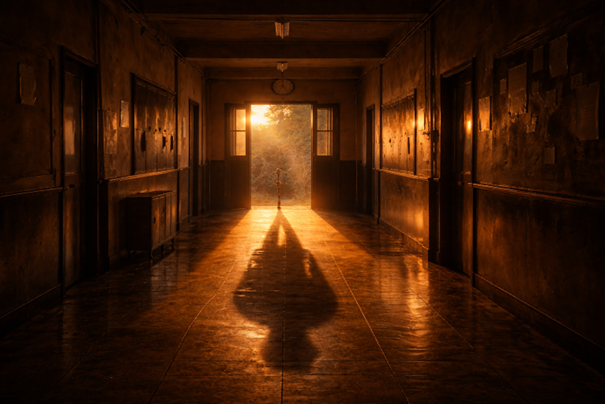
A corridor is only a lie when someone else builds it. The liar knows the walls are artificial—that's the whole point. But what happens when you build one for yourself and forget you built it?
I carried a memory for years. A conversation with a friend, late at night, in which he said something dismissive about my work—something cold enough that I filed it under betrayal and left it there. It shaped how I treated him afterward. Small distances. Declined invitations. The slow arithmetic of resentment.
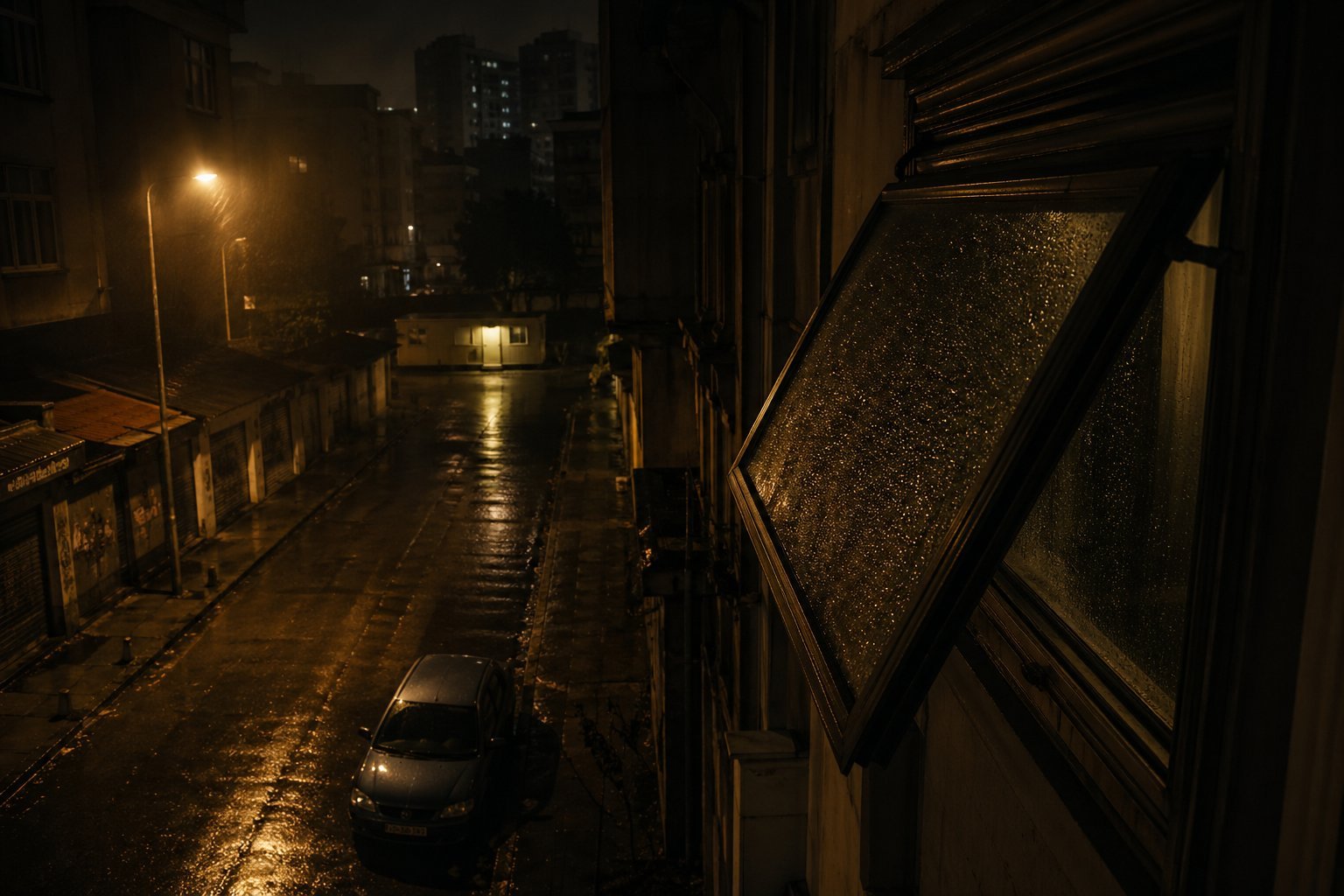
A decade later, I mentioned it. He had no idea what I was talking about. This went beyond simple denial; he possessed zero memory of the event. So I went back and replayed it—really replayed it—and realized I could no longer hear his exact words. I had the setting. The kitchen. The hood's hazy yellow light. The sentence itself had been rewritten so many times in the retelling—to myself, mostly—that I could no longer distinguish his actual phrasing from my assigned meaning.
I had built a corridor. I had walked to the only door. And I had done it to myself.
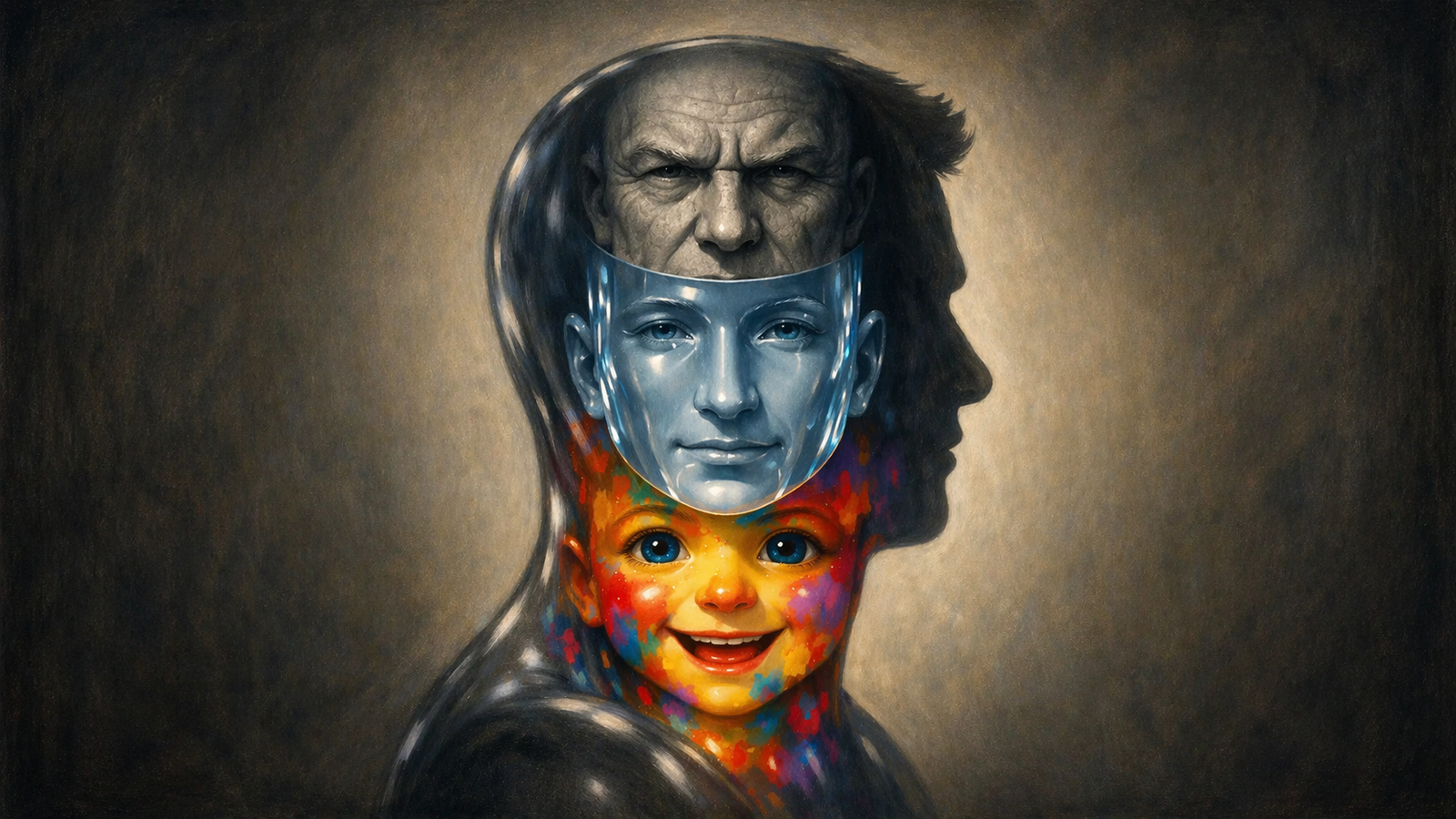
The brain is no camera. Everyone knows this, but almost no one feels it. We process reality entirely as a story. Something happens, and before we've finished living it, we're already explaining it to ourselves—selecting details, assigning roles.
The trap is the feeling of recognition. When you see a pattern, it arrives as if you found it—hiding the fact that you built it.
Walk into any room with a belief and count how long it takes before someone confirms it. Your ears tune themselves to one frequency. Everything else becomes noise. The signal was yours from the start.
There's a man I know—smart, accomplished, certain that the world is organized against people like him. Every setback is evidence. A rejected application: bias. A delayed promotion: politics. A friend's success: luck, connections, external forces devoid of merit. His map is airtight. Nothing gets in that would require redrawing it.
I recognized the architecture. I've built rooms like that. Smaller ones, maybe. Rooms where I was always the one who tried harder, deserved better. Rooms with no windows.
We abandon the territory the moment the map stops matching it.
I watched it happen to me on İstiklal one evening. A street musician was playing—badly, I decided within seconds. Out of tune, wrong tempo, amateur. I walked past. Something made me stop fifty meters later. The crowd's reaction pulled me back. They were still. An authentic, unperformed stillness. I walked back, and this time I heard the song before I heard the technique. It was a sevda song, and his voice broke at exactly the right place—triggered by the lyric hitting him in real time. My first reading had been accurate in every technical detail and wrong about the only thing that mattered.
I had perceived. I had failed to truly see.
The difference between lying and misperceiving is that the liar maintains two versions—the truth and the performance. The misperceiver has only one. The lie is a corridor with an architect who remembers the blueprint. Misperception is a corridor whose architect burned the blueprint and moved in.
This is why it's harder to fix. You can confront a liar with evidence and, in theory, the structure collapses. The truth was always there, hidden but intact. Confront someone with evidence against their perception, and you're attacking the only truth they have. The walls simply thicken.
I've seen it in arguments. The moment the evidence gets too close, something shifts—locking immediately into defense. The eyes change. The voice flattens. You can watch the exact moment a person stops processing information and starts protecting architecture. I've felt it in myself. A tightening behind the sternum. A sentence forming before the other person has finished speaking. The body knows before the mind admits it: this fact is a threat to the building, and the building must survive.
Here's the part that keeps me up.
What if some of the buildings should survive?
A woman loses her son and decides he is in a better place. She builds an entire architecture of meaning around the loss—signs, small coincidences reclassified as messages. All of it keeps her alive.
A man fails at everything he tries for fifteen years. He tells himself the story of persistence—the long arc, the late bloom. His map says the territory will eventually match. Is he deluded? Maybe. Is the delusion the only thing standing between him and the abyss? Also maybe.
Perception often serves as a negotiation with reality, moving far beyond mere distortion. A way of saying: I know, but I can't—yet.
I'm unsure when negotiation becomes denial. I doubt there's a clean line. I think most people cross it without noticing, and by the time someone else notices, the building has load-bearing walls.
The liar's quiet disappointment has its own mirror here, inverted. The world keeps surprising you, and you keep missing it. The same argument with the same person, replayed for the hundredth time, and you still believe the next one will be different. Every surprise is reclassified as an anomaly. The pattern holds. The map stays clean.
There's a particular loneliness in this. The liar is isolated by secrecy—he can't tell anyone the truth. The misperceiver is isolated by certainty—she can't hear anyone else's version. Both end up in the same place: a room with no windows, convinced the room is the world.
I've been trying to notice the corridors. It's harder than it sounds. You can't inspect the lens while you're looking through it. The closest I've come is a feeling—a faint resistance when something doesn't fit. A fact that slides off. A compliment I can't absorb. A criticism that burns longer than it should. These are the seams. The places where the construction shows.
I don't know what's on the other side of the architecture. I suspect it lacks the clean, bright clarity promised by "seeing things as they are," revealing a far messier territory. A territory with no map. The discomfort of not knowing which version of the conversation was real.
But I think the discomfort might be the point. The moment perception becomes uncomfortable is the moment it might be getting accurate.
The buildings we never question are the ones we should.
I'm starting to check the blueprints. Some of them are mine. Some of them were inherited floor plans from people who built their corridors and handed me the keys.
The architect is waking up. The building is still standing.
I don't know yet if I want to renovate or walk out.
But at least I know there's a door.