














I am walking along the İdealtepe coast. It's five minutes until sunrise; the sky is torn between deep orange and pale blue, and the sea is almost silver. There isn't a single thought in my head. At least, that's what I think.
Suddenly, the opening sentence of the article I've been stuck on for three days pops into my mind. I stop and look around. Then I laugh to myself. "Is this what I've been struggling with for three days?"
I have experienced this before. Everyone has. In the shower, staring out the window on the bus, waiting in line at the grocery store… The moment I get distracted, my brain silently starts throwing a party in the background. Neuroscientists call it the Default Mode Network—the brain's idle mode. A network that kicks in when the noise dies down, letting the mind make connections it normally wouldn't. Mathematician Henri Poincaré cracked a problem he had struggled with for weeks—on a bus, while thinking about something else entirely. His brain had never stopped working in the background.
Perhaps fishermen illustrate this best. They sit on the shore for hours, looking at their fishing lines, thinking about nothing—at least, that's how it looks from the outside. But in those tranquil moments, the mind is quietly rearranging everything.
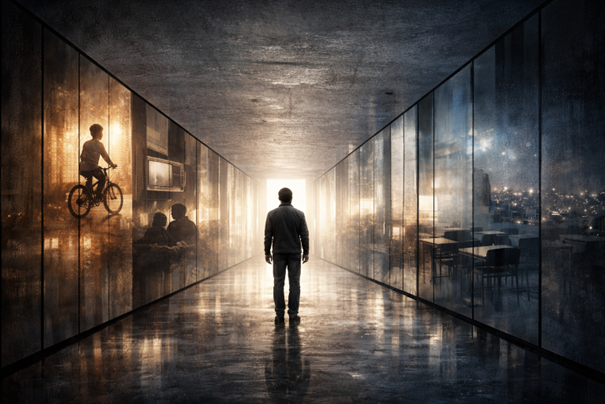
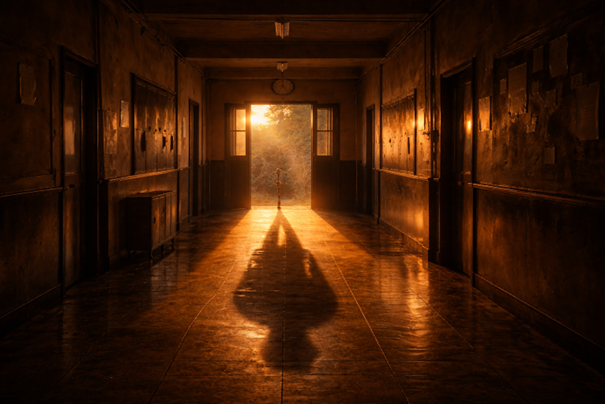
Think of memory as cluttered rooms, each one connected to the others by a labyrinth of corridors—by time, by feeling. When every room is occupied, when every corridor is cramped, the traffic stalls. Nothing moves. New ideas need empty spaces to pass through. It's the only way to keep the network moving.
There is also the matter of letting go.
In class, a student of mine was glued to his paper, so terrified of making a mistake that his pen wouldn't move. The moment he noticed his first wrong word, the color drained from his face, his breathing quickened, and his hands began to shake. The harder he tried to suppress the panic, the faster he wrote, only to press so hard while erasing that he nearly tore the page.
He stopped.
He turned to me and, in a small, helpless voice, asked, "Hocam, what if I write the wrong thing?"
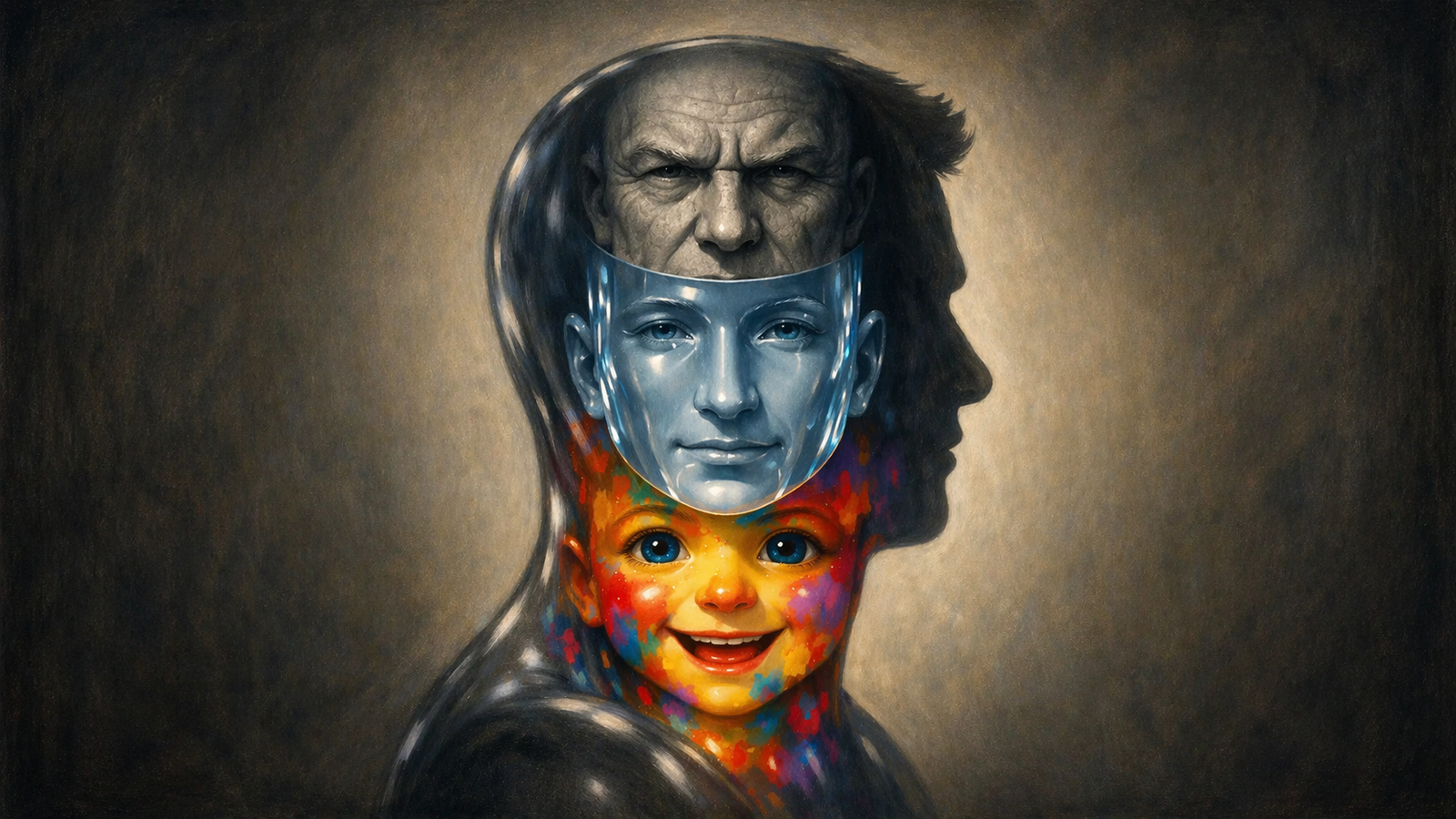
His panic wasn't unique. Performance anxiety, the fear of making mistakes, the fear of judgment, the rush to be fast—they all silence the brain. It locks down. What psychologist D.W. Winnicott calls the transitional space is an antidote to this: that gray area between reality and imagination. A realm where there is no fear of making mistakes, where the outcome is uncertain yet exciting. This is where the DMN operates—both want the same thing: to drop the pressure.
The second you let go—while doing the dishes, or staring at the ceiling—the brain goes back to work.
Now, when an idea hits me by the water, I stop—unlike all those times I let them fade away. I pull out my phone and write it down. Then I keep walking, but it isn't the same walk anymore; the sun is fully up now. The sea is no longer silver—it is blue.
The brain is funny like that. We think it's working the least when actually it's working the hardest.