


Short Fiction
The halıcı in Kreuzberg owns the building and won't sell a single flat. Narrow and tall, French balconies on every floor. Every flat one-plus-one. Kahraman walks through all of them. The ground floor is high, windows two and a half meters off the street. Unlike the open-plan boxes upstairs, this one has a separate kitchen. He takes it. The street isn't safe, but his budget reaches here. The best of what's possible, he tells himself, taking the keys.
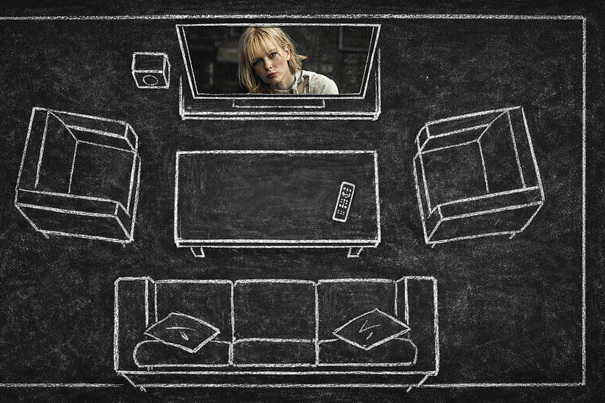
The couch is from before. The television. Everything else stayed with the apartment, and the apartment stayed with her. The car went last month, when the alimony schedule began.
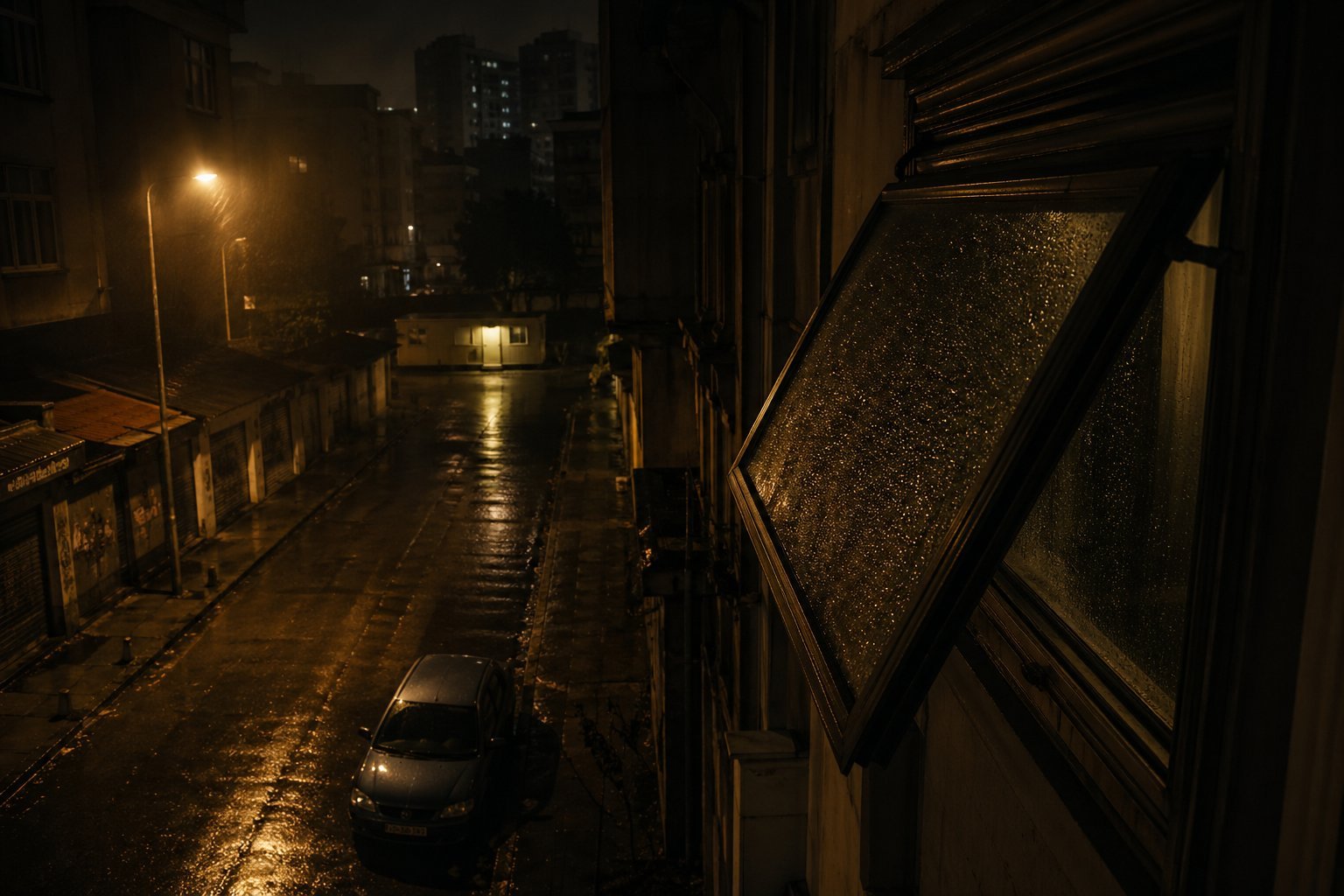
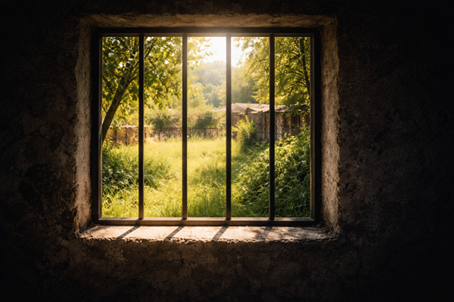
Next door there's a place with film-coated windows. No sign. Door always closed in daylight. On the other side, Hotel İnci. His window faces the road, high up. No one could reach in from the street, he thinks. Safe.
He moves in.
Within the first week, a Friday night, he falls asleep on the couch. He has come home late again, the suit jacket on the chair, the tie still around his neck, loose. Supernatural is on. He isn't watching it. The vasistas is open because the glass gets warm.
—Yeğenim, get me a water from there.
The voice cracks in his ear. Thick, clear, sure of itself. He jolts awake. The sound is inside the room, vibrating against the couch cushions.
—Coming right up, he mutters, swinging his feet to the floor, taking a step toward the dark kitchen.
Down on the street, metal legs scrape against the pavement. A chair is pulled back.
He stops.
He goes to the window. The floor is cold under his bare feet. He looks down through the vasistas. They've set a table right under his glass. Two men. Rakı. A half-empty bottle sweating onto the tablecloth. The stocky one, mustached, a little heavy, looks toward the film-coated windows. The waiter steps out. He moves with a practiced tilt of the shoulder, a man used to sliding through narrow spaces. So it's a pavyon. It opens on weekends.
He closes the vasistas slowly. The hinge glides. The latch clicks—a small, bright sound. The man below doesn't look up. He knows what happens above him without lifting his chin.
Weeks pass. Kahraman still doesn't know the street. Which corner is empty at which hour, which shutter rolls down when. He stops looking down from the vasistas. The heavy bassline of the pavyon's music creeps through the floorboards every Friday. It arrives through the soles of his feet before his ears register it. Sometimes, coming home late, he sees a shadow lingering by the film-coated windows. A cigarette glows. The orange tip flares bright, then dims. The smoke rises in a thin column, no wind to break it. A head turns his way. His shoulders tighten. A bouncer getting air, he tells himself. I have the street memorized.
One night he is walking home. Late. Light rain. The kind that hangs in the air, beading on wool, on eyelashes. Distracted by the math he can't stop running—the rent, the alimony, the December bonus that probably won't come this year. Instead of the usual corner he turns one earlier. His feet decide before he does. A few steps in, the street narrows, and narrows again. The walls lean in. This is one street under mine, or one above, he thinks. I don't know. The asphalt is wetter here, older, cracked in places where weeds have pushed through and died.
Four of them at the corner. Around him. They see he is uneasy. The tall one tilts his head. A question mark with shoulders.
—Hayırdır birader.
The word birader lands flat, a stone dropped on a counter. The man's hands stay in his coat pockets. Kahraman sees the weight there, the stillness of something held.
—Nothing. I'm going home.
—You don't just pass through here like that. Hold up a second.
His tongue dries. The spit thickens at the back of his throat.
—Brother, don't start, not at this hour. I live up the road, let me get home.
One of them lets out a hollow laugh—air pushed through teeth. From behind, a hand finds his hair. Thick fingers, knuckles grinding into his scalp. His neck snaps back. The skin at his temples goes tight. He hears the wet click of his own throat. The one in front draws his head back, comes forward to headbutt him. Kahraman jerks his head sharply to the right. Hair slips from the grip—a burning rip, strands giving. The other's skull meets air. Teeth clack together, the impact landing in his own jaw.
The one beside him reaches for his belt. With the corner of his eye Kahraman catches the grip—black, ribbed. His hands scramble at the man's waist, clumsy, desperate. The nylon of his jacket slips under his fingers. A belt loop, a cold zipper, then metal. The grip fits wrong in his palm—backwards, sideways. Cold and surprisingly heavy. He yanks it free, throwing his shoulder blindly into the man's chest. The air leaves him in a grunt. He goes down, the back of his skull hitting the asphalt with a sound like a dropped melon. The one in front steps in. Kahraman swings the gun wildly, gripping it by the middle. The heavy steel butt catches him across the cheekbone. A dense, wet sound. He stumbles back, one hand going to his face, fingers coming away dark.
Kahraman stumbles too, completely off balance, and someone catches him from behind, by the neck. The rough fabric of a sleeve cuts off his air. Wool. It smells of cigarette smoke and something sour, old sweat dried into the fibers. The heavy gun slips from his fingers. His fingernails scrape against it as it falls. Something strikes the back of his head. A sharp, bright white. Then the ground.
A trailer.
He opens his eyes. Low ceiling. The panels are warped, water-stained at the corners. A yellowish light. It buzzes—a fluorescent tube on its last weeks, flickering too fast to catch. The hum gives it away. Smell of fried oil, sweat, and cheap barbershop cologne. The oil is old, reused too many times, a sour note underneath the grease. His head throbs in a slow, rhythmic pulse. The back of his neck is wet. Sticky. He leaves it untouched. His suit jacket is still on, the shoulders dark with rain. The tie has gone somewhere. The shirt is wet at the collar. The clothes belong to a different room than this one.
His hands rest on his knees, pressing into the cracked vinyl of a booth seat. His left thumb trembles—a small spasm. He watches it. The thumbnail is dirty. Blood under it. He focuses on the thumb because looking up means seeing things his bladder won't survive. The thumb trembles. He watches it tremble.
Someone sits across from him. He smells the man before he sees him—the cologne, sharp and synthetic, cutting through the oil. Leather pants shift against vinyl with a sound like a low exhale. White shirt, two buttons open at the top. The light is behind him, a corona around his head, his features in shadow. He sits like a boss. The booth creaks under his weight.
—Who are you, the man says. His voice is calm. A verification.
—Kahraman, he says. His own voice comes out flat, a dead string.
The man turns the word over, slowly. Kahraman ha. A brief smile. The smile stops at the mouth.
—What were you doing there.
—Wrong turn.
The words leave his mouth and immediately feel thin, a lie that tells the truth. The boss gives a short laugh. He turns to the man beside him and says something low, fast. The words sit close to each other, too fast to catch. One word lands. Halıcı. The other man nods, slowly, as if confirming a name on a list. The boss looks back at Kahraman. Something has settled behind his eyes. The other one takes something from a bag. Small. A vial. The glass catches the yellow light. A syringe still in sterile packaging, which he tears open with his teeth.
—Don't worry, the boss says. Nothing's going to happen. You'll just calm down.
The other man taps the vial. The glass clicks—a clean, medical sound. He draws the liquid, slow, deliberate. The plunger rises with slight resistance. He holds the syringe up to the yellow light and flicks it with a thick finger. Once. Twice. The bubbles inside scatter and regroup. A single drop blooms at the tip of the needle, catching the light like a bead of glass.
The man takes Kahraman's wrist. Clinical. His fingers are dry and warm. He turns the forearm up. The inside of the elbow is pale, blue veins branching under the skin like a river delta. He taps the crook of the arm with two fingers—soft, almost polite, like a nurse. Something tightens around the bicep. A belt. The leather bites, then settles. The veins rise. A cold circle of alcohol. The smell cuts through the fried-oil air, sharp and clean, a hospital smell. Then the needle.
Cold, sliding in. He feels each layer give—the skin, the fat, the wall of the vein, each one a separate surrender. A small pop he feels more than hears. When the plunger goes down, the cold travels up his arm and into his chest, a slow tide. The needle withdraws. A cotton ball pressed to the inside of his elbow, held there for a count of three. The belt loosens.
For three seconds nothing happens.
On the fourth, it starts.
Fear detaches. It moves behind glass. He can see it—a small, familiar shape, his own fear, pacing like an animal in the next room. He can't touch it. He doesn't need to. The trailer blurs at the edges, sharp in the middle. The yellow light is very yellow. The buzz of the fluorescent tube separates into individual frequencies. The boss is still talking. His voice arrives a little late, thunder following lightning, sound lagging behind the shape of his mouth.
His head is too clear. Everything visible at once. The boss's face is in the light now. An ordinary face. A mole under his left eye. An old shaving cut on his jaw that healed wrong. His eyelashes are short. He notices all of it. The information piles up, useless and precise.
Two streets over, a dark blue VW Passat is parked along the curb. The kind of car no one looks at twice. Rain on the windshield, beading and running, beading and running. Inside, two men. The younger one in the passenger seat, leaning forward, breath fogging the glass. He wipes a circle clear with the side of his hand. From here the trailer sits in an empty lot at the end of the alley, fifty meters away. A weak square of yellow light leaking from one of its windows.
On the dashboard, a battered Lehramt prep book for Geschichte. Coffee stains on page 47. The pages are wavy from a coffee that never dried right. He doesn't open it anymore. He no longer pretends he will.
The radio between them crackles.
—...negative, negative, hold position. I say again, hold.
The older one, behind the wheel, doesn't move. His hands are at ten and two as if he's still driving. The younger one's voice is tight, the throat constricting around the words:
—He's a civilian. They took him inside. We have visual on the civilian. I repeat, we have visual.
The word stays with him after he says it. Civilian. He had wanted to teach history. Three exams the other way and he might still be one.
Static. A long breath of it, filling the car like water filling a basin. The younger one's leg is bouncing. The older one sees it but says nothing.
The older one lights a cigarette, cracks the window an inch. He has been doing this twenty years. He still likes it, mostly. Tonight he likes it less.
—Six months on this. Six months. You breach now, it's burned. Hold. Your. Position. Do not engage. Acknowledge.
The younger one closes his eyes. Opens them. The trailer's yellow window doesn't change. He swallows. He keys the radio.
—Collateral. Copy. Standing by.
He releases the button. The static hums. The older one finally turns his head. There's nothing in his face. He looks back through the windshield, at the rain, at the yellow window. The younger one wipes the glass again. The circle re-fogs almost immediately.
The word sits between them. Collateral. Neither of them touches it.
Inside the trailer the boss stands. The booth sighs as his weight leaves it. He leans over Kahraman. His cologne has a base note that wasn't there from across the table, something musky and warm. He rests a hand on Kahraman's shoulder. The weight of it almost kind.
—Sleep, he says. Don't fight it. You won't remember any of this anyway.
I have to remember, Kahraman thinks. The thought surfaces through the chemical warmth, a stone breaking still water. His brain throws up walls. Hold, he tells himself. He carves the room into memory, traps the details with words before they dissolve. The cracked vinyl under his left hand—a split in the shape of a Y, the foam underneath yellowed and stiff. The hum of the fluorescent tube—a note somewhere between si bemol and si. The boss's face—ordinary, tired around the eyes, the mole, the shaving scar. Smell of fried oil, the sour note beneath it. The cotton ball still pressed to his arm, held by tape he doesn't remember being applied.
He repeats them. Vinyl. Yellow light. Si bemol. Oil. Mole under left eye.
The words slip. They slide off each other. The edges of the trailer dissolve into the damp concrete of the street. His eyes slide shut—heavy, warm, a slow curtain falling. He tries to hold onto the yellow light, but it turns into a streetlamp. The sodium orange of the lamp outside his building. I'm one street above, he thinks, or one below. Why didn't the halıcı sell the building, he thinks, one last time, very slowly, each word a heavy stone he drags.
Vinyl.
Vasistas.
Yellow light.
Yeğenim.
A water.