




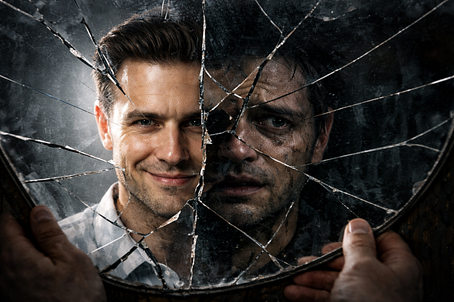


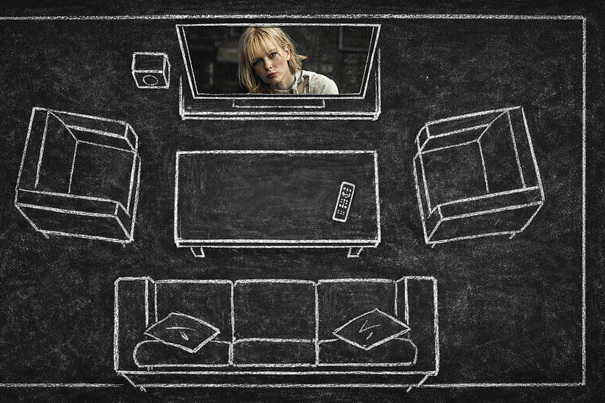






Four men in a room. Ardbeg in our glasses, heavy and gold. The screen pulling us into Dogville's chalk-lined dark—a stage set pretending to be a town, cruelty made architectural.
My stomach knots somewhere in the second act. The third. I stop counting. The whisky sits untouched. I'm aware of my jaw. I reach for the remote and kill the image mid-frame. Grace frozen. The sudden silence is violently loud.
Nobody speaks for a moment. One of them sets his glass down.
"This is too much," I hear myself say. My voice sharper than I intended.
Three pairs of eyes turn toward me. Waiting, maybe. The screen holds its frozen frame. I don't look at it.
It is a physical rejection. Not a moral argument, not yet. My body decided before my mind caught up—the same tightening I've felt in arguments, the same thing I described in On Perceiving. But this time I'm not protecting a building. I'm refusing to enter one.
The moral architecture we've inherited insists on a resolution: forgiveness. The highest, cleanest, most redemptive form. I look at the frozen screen and realize I don't believe in it.
To truly forgive—to look at intentional destruction and offer absolution—you need the towering arrogance of a god.
We conflate survival with forgiveness. Moving on is mechanical. Processing the grief. Letting the tissue knit over the wound. You step back from the fire. You map the exact perimeter of the heat. The skin heals. The memory of the burn stays perfectly intact. The ledger remains exactly as written.
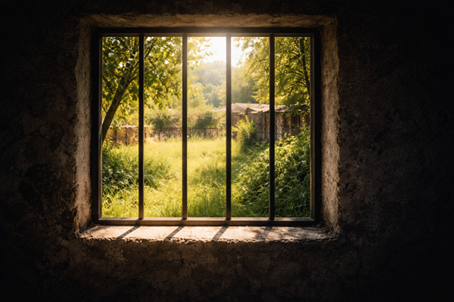
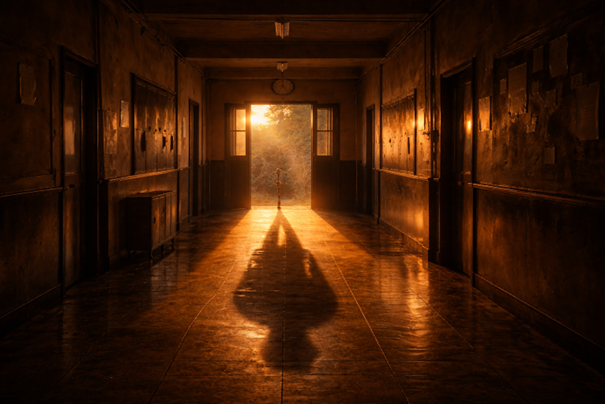
Forgiveness demands a reset. It takes that ledger, draws a thick black line through the total, and hands it back to the debtor. The pardoned man steps out through the gate and resumes the habit on the first afternoon of freedom. Forgiveness is a corridor, handing out a permit at the exit door.
One summer afternoon I grabbed a garden gate by the iron bar. The scorpion hadn't wanted to sting me, maybe. Maybe it was frightened. Maybe it simply did what it was. Writhing in pain, forgiving it never crossed my mind. Now, before I put my hand anywhere, I look first.
The screen stays dark. Someone sets a glass down, a heavy clink against the wood in the quiet. Another reaches for a phone, pairs it to the speaker. The night pivots.
Leonard Cohen.
Famous Blue Raincoat.
We sit there for two hours. We let the song pull us apart. The slow, deliberate drag of the acoustic guitar. The heavy, resigned frequency of a man drafting a letter to the friend who betrayed him. The man who took his woman, who carved out a piece of his history.
Then the line drops into the center of the room, sinking straight to the floor.
Did you ever go clear?
It hits all four of us—the breathing in the room changes. We wait for the lyric to offer an act of grace. It delivers a cold acknowledgment of a passed storm. Cohen writes the letter. He documents the theft. He signs it. Sincerely, L. Cohen.
The slate stays deeply scored. The lock stays turned. He states the facts, wishes the man a quiet afterworld, and folds the paper.
An honest negotiation with betrayal. The debt sits untouched in the archive. You just stop trying to collect it.
I still don't know what forgiveness means.
Some debts belong to the gravity of the room.