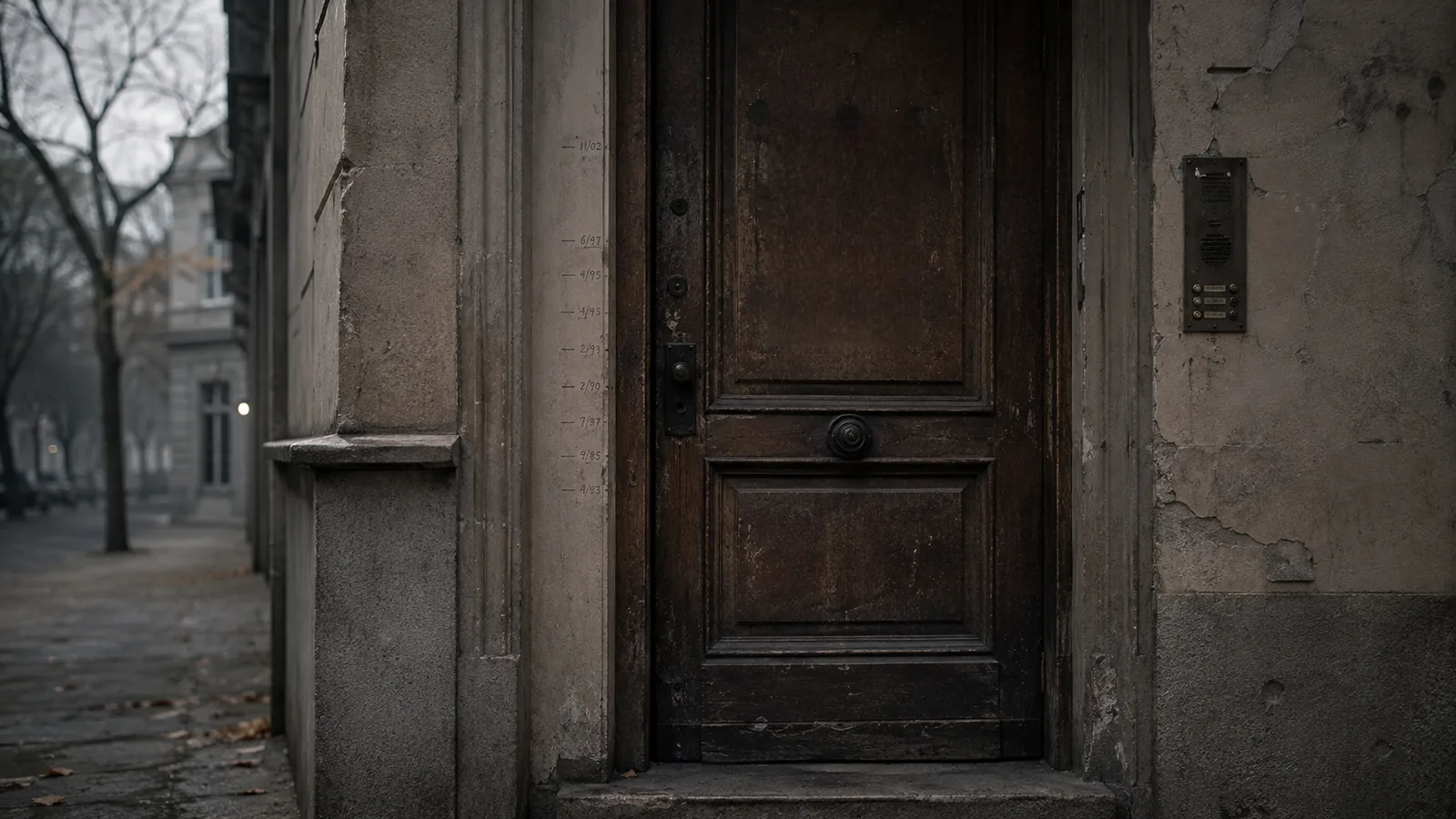
The notice had gone up weeks ago, on the street door. Nobody was behind that door to find it; one of the old neighbors, still on the street, had seen it in passing and rung his mother, and she had rung him the same evening. A photograph came after the call. The seal, the block number, the word demolition, a date—and all of it at a height that had once been out of his reach. The date was this week.
His mother meant to be there for it. She had said so in the flat voice she kept for settled things—she would stand at the corner while the block came down, to the last of it, and no one was going to move her somewhere kinder. So there would be someone beside her when the machines came at first light. That was the whole of the trip.
He had booked the flight that same night—the 7:45, the only one that day; it would land after dark. The bag had stood by the door since: a change of clothes, the prescription folder. The key had gone across the landing to the neighbor.
Two days of leave, the weekend after. The morning stayed open—a record on, low, the laptop woken to the folder. The street was in some of them, from before the trees along it filled out. The door, before the notice. These lived on the screen now; the printed ones had been at the house, and what he had taken of them, the moves had taken in turn. That week he called home to ask after an old photograph of the two of them, from before. His mother looked. There was none.
His father had been a year gone.
The block had been coming down for longer than that, and no part of it had asked him; there was only the date, and he had taken leave for the last of it.
The interior doors had glass then, small panes in a wooden grid. A ball indoors on a wet afternoon, one pane gone to the floor. The scolding came from the kitchen and reached every room in the flat. Some of it was still there to be heard.
At one the phone rang—the general manager’s own line, on a day the office knew his desk was empty. It could not be left, and it could not be handed to the someone else every desk is said to have; his had never had one.
The bag came with him to the office; the far side of the city came first. By four it was done.
The routine broke there. The train from his corner would have run straight to the airport—five minutes’ walk, no change. From the office side the water lay between, and the short way over it was the ferry. The slope down to the pier ran along the park.